
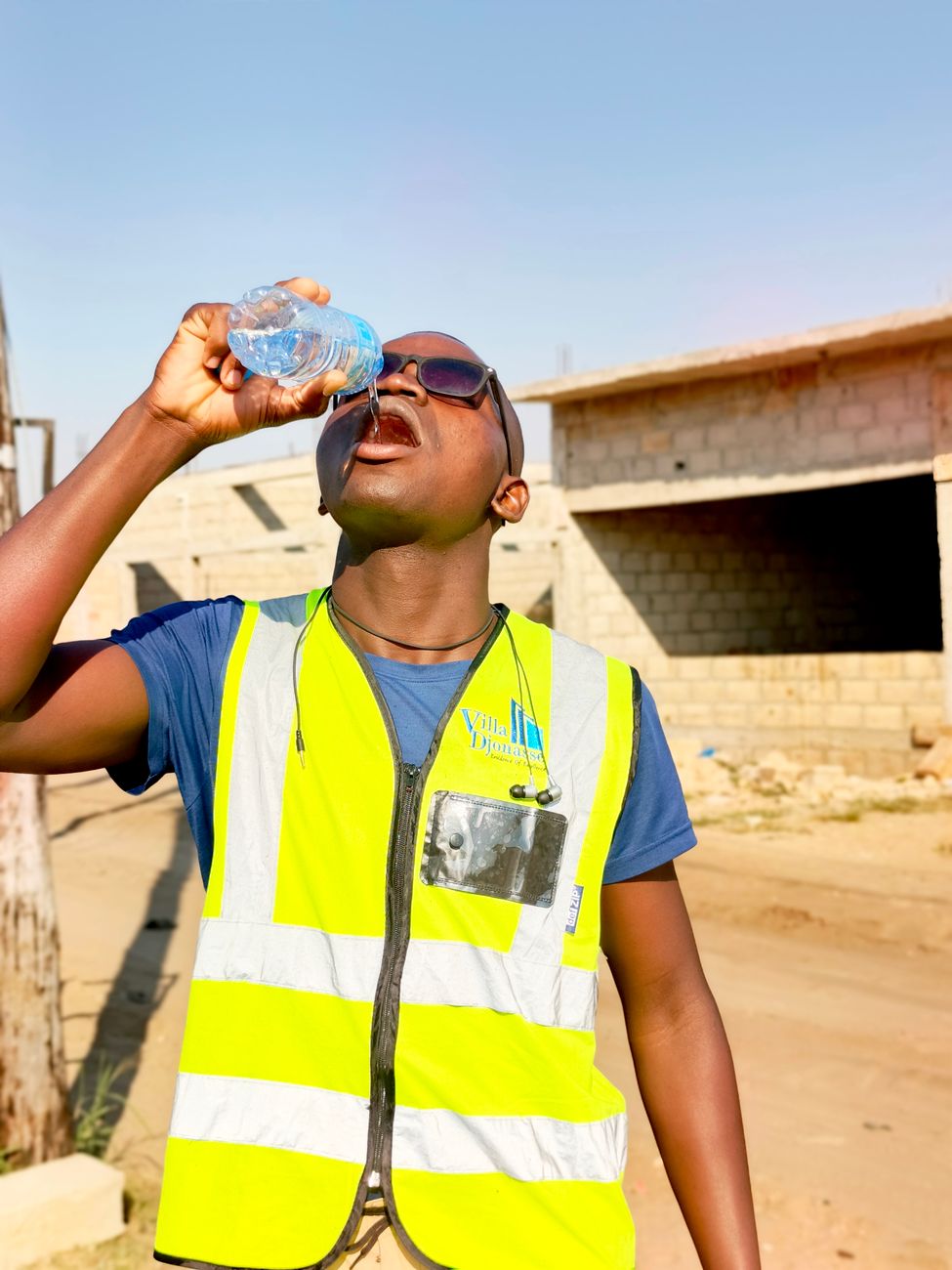
Every Gulf country restricts outdoor work during the hottest hours of summer, usually from around June to September, with the exact dates and hours announced each year by the labour authority. The ban is not a favour. It is law, it protects your life, and companies are fined for breaking it.
What the midday break normally means
- Work in direct sun and in open areas is stopped for a fixed block of hours in the middle of the day.
- Employers must provide shaded rest areas, cool drinking water and rehydration salts, and a first-aid response for heat illness.
- Total daily hours must not increase to make up for the break without the overtime the law requires.
- Exact hours and exempt activities differ by country and are announced each season — check your labour ministry’s announcement, and look for the notice that must be displayed at your site.
Recognise heat illness before it becomes an emergency
- Early: heavy sweating, thirst, muscle cramps, tiredness, headache.
- Serious: dizziness, nausea, fast pulse, cool clammy skin, weakness. Stop work, get to shade, loosen clothing, drink water with rehydration salts, cool the skin and neck with water, and tell someone.
- Emergency: confusion, slurred speech, no sweating with very hot dry skin, vomiting, fainting. This is heat stroke and it kills. Call the emergency number immediately, move the person into shade, remove extra clothing and cool them with water while help comes.
Protecting yourself through the summer
- Drink before you are thirsty — small amounts often, through the whole shift.
- Use oral rehydration salts on heavy days. Water alone does not replace what you sweat out.
- Light, loose, long-sleeved clothing and a wide hat protect better than bare skin.
- Fasting workers in Ramadan should ask for lighter duties and shaded tasks; supervisors are expected to accommodate this.
- Watch your workmates. People rarely notice their own confusion — the man next to you will.
If your employer breaks the ban
You do not have to accept it and you should not resign over it. Photograph the site with a timestamp if you safely can, note the date, time and location, and collect the names of other workers. File a complaint with the labour ministry’s worker channel or hotline in the country you work in — reports can usually be made anonymously, and inspection teams do visit. Tell your embassy’s labour section too. Sites are shut and companies fined every summer because a worker reported them.
Dates, hours and exemptions change every year and differ by country. Confirm with the official labour authority announcement for your country. Share what your site is actually doing in the comments — it helps others know what is normal and what is not.
From Gulf Desi Hub
Hiring workers from India, Pakistan, Bangladesh, Nepal or Sri Lanka?
Post your vacancy here for free. We check the company before a listing goes live, and no worker is ever asked to pay to apply.
Post a Job — Free
Leave a Reply